Business Name: Manning Detail & Coatings
Address: 1812 W Sunset Blvd #30, St. George, UT 84770
Phone: (435) 572-0451
Manning Detail & Coatings
Manning Detail & Coatings is a mobile detailing and ceramic coating outfit that offers a shop, specializing in paint correction and ceramic coatings.
1812 W Sunset Blvd #30, St. George, UT 84770
Business Hours
Monday thru Sunday: 9:00am - 6:00pm
Facebook: https://www.facebook.com/manningdetail.coatings/ Instagram: https://www.instagram.com/manningdetailandcoatings/ YouTube: https://www.youtube.com/@manningdetailandcoatings
Ceramic covering sits at the crossroads of car care and chemistry. When people ask me if it deserves it, they are generally thinking of gloss and beading. What they really desire is a surface that looks sharp every day, resists the grind of life, and remains easy to keep. Done right, ceramic provides exactly that. Done hurriedly, it costs money without fixing the underlying issues in the paint. The distinction lies in prep, product choice, and expectations.
I have actually fixed and covered everything from day-to-day chauffeurs to weekend toys and auction-bound classics. The automobiles come with different paint systems, different histories, and various owners' habits, yet the very same core facts apply. If you understand what a ceramic coating is, what it is not, and how paint correction sets the stage, you can make clever decisions for your own car detailing routine, whether you book a store or go the do-it-yourself route in your garage or a mobile detail appointment in your driveway.
What a Ceramic Coating Really Is
A contemporary automotive ceramic coating is a thin, transparent layer of inorganic polymers that bond to the clear coat. Many are based upon silicon dioxide, in some cases integrated with silicon nitride or titanium dioxide, provided in a solvent that flashes off throughout setup. As soon as treated, the finishing forms a dense, crosslinked network that resists chemicals and drives away water. Think about it as a sacrificial, harder skin over the clear coat, simply a couple of microns thick.

That thinness surprises individuals. You do not get millimeters of armor. You get a surface with higher firmness, more powerful chemical resistance, better hydrophobicity, and measurable UV filtering. The information matter:
- Hardness and abrasion: Coatings are more difficult than waxes and sealants, but they are not scratch-proof. They help withstand micro-marring from mild cleaning, yet they will not stop a gritty towel or an automated brush tunnel from leaving marks. Chemical resistance: Bird droppings, bug splatter, and road movie etch paint when left to stew. Ceramic coatings buy you time. They slow the chemical attack and make clean-up less dangerous. They still need prompt removal. UV security: Most coatings consist of UV inhibitors. On single-stage paint, the advantage is noticeable. On modern clear coats, it still assists sluggish oxidation and fading. Hydrophobicity: The beading and sheeting you see on layered automobiles is not just a party trick. Water leaves the surface much faster, taking dirt with it. That makes washing less frequent and drying less stressful.
A finishing does not hide swirls, sanding marks, or buffer routes. If you trap that in the covering, you seal in the problem and, even worse, make it slicker and more visible. This is why paint correction and panel preparation drive the result more than the brand name on the box.
How Paint Correction Sets the Stage
Paint correction indicates leveling the clear coat to eliminate defects. You are not filling; you are cutting. That needs a determined approach. I constantly start with paint examination under mixed lighting, both LED and halogen, to catch various problem types. Daily motorists normally have wash-induced swirls, random isolated deep scratches, and often dealer-installed holograms. Black paint informs on you, while silver conceals sins however still gain from careful work.
There are 3 levers to manage: pad aggressiveness, compound or polish cut level, and maker speed and pressure. On soft Japanese clear, a medium-cut foam and a diminishing-abrasive polish can achieve 70 to 90 percent correction in a single action. On hard German clear, you may require a microfiber cutting pad with a compound, followed by an ending up polish. The goal is always the least aggressive approach that attains your target.
If you are prepping for ceramic, you wish to finish as great as the paint permits, then strip polishing oils before finishing. Coating particles bond to the clear coat, not the residue. This is where a devoted panel wipe, frequently an isopropyl alcohol and surfactant blend, matters more than people think. Do not substitute home alcohol directly from a container unless you understand the concentration and your paint's tolerance. A streaky, half-evaporated wipe leaves contaminants, and that means bond failure or high spots.
The most typical error I see is hurrying the last 10 percent. When a panel looks terrific under shop lights, roll it into indirect sunshine. If stray holograms only appear outdoors, they will haunt you forever under the covering. Paint correction is the structure. Once the finish cures, the foundation is locked in.
Coating Grades and What They Mean in Practice
There is no universal grading system, but finishes fall approximately into 3 groups: consumer, prosumer, and expert installer just. Each has compromises.
Consumer coatings are created for much easier setup at the expenditure of supreme life expectancy. They flash slower, tolerate warm or cool garages better, and usually included detailed directions. Many of these provide 1 to 3 years of real-world resilience when maintained appropriately. They are ideal for newbie do it yourself users or anyone coating outdoors under a canopy with a mobile detail setup.
Prosumer finishes typically consist of a greater solids percentage, faster flash times, and more powerful solvents. They provide a denser movie and potentially 3 to 5 years of service with maintenance toppers. You require to control temperature, humidity, and timing. If you can hold 60 to 75 degrees Fahrenheit and 40 to 60 percent humidity, your chances of a perfect set up rise quickly.
Installer-only finishes vary commonly. Some contain strong solvents and greater solids, and some need a primer polish layer from the same brand. The exclusivity frequently connects to warranty assistance as much as chemistry. When preserved under a brand's system, these can last 5 to 7 years or more, supplied the car's cleaning regimen is mild. They are unforgiving if you miss the wipe window. The gloss can be spectacular, specifically on darker colors.
I do not chase after the greatest year count on the label. I try to find slip, chemical resistance, and reactivity with regional water. In a hard-water area, a coating with strong sheeting favors less mineral deposits. In seaside locations, focus on chemical resistance to salt spray and bird activity. The label years are marketing shorthand. Weather, storage, and wash method are the genuine factors.
Surface Preparation: Beyond Wash and Clay
You can not coat over bonded contamination or wax. The prep recipe that works regularly uses layers of cleaning, each targeted at a different contaminant.
Start with a pre-wash or foam to reduce contact. If the automobile is heavily stained, a citrus pre-wash or a moderate APC at correct dilution can assist strip traffic film. Two-bucket contact wash follows, pH neutral soap for vehicles with existing wax or sealant, or a stronger shampoo if you are about to polish. Rinse thoroughly and move to decontamination. Iron fallout removers do the peaceful work here, liquifying embedded ferrous particles, particularly on rear bumpers and lower doors. Expect purple bleeding on lighter colors. Follow with a fine-grade clay or artificial clay mitt with a lot of lubricant. Your goal is glassy smooth. If your clay pulls black, reassess the pre-wash step.
Once the surface area is bare and slick, paint correction happens. After correction, panel ceramic coating clean gets rid of oils. Some shops add a primer polish from the coating brand name, a product that leaves a resin film to enhance bonding. If you utilize it, respect treatment times before using the covering. Cut corners and you run the risk of solvent bite or patchy bonding.
Wheels, glass, and trim gain from finishes too, however use versions implied for those products. Plastic can stain from a body finishing. Glass coverings need strong hydrophobics without wiper chatter. Wheels like high-temperature tolerance. Match chemistry to the part.
The Application Window: Managing Flash and Leveling
Coating application looks basic on video. In reality, your timing and lighting make or break the finish. An excellent routine has a stable pace and a calm environment. You desire a lint-free applicator block with a suede or microfiber wrap, fresh short-nap towels for leveling, and intense, angled lighting to find high spots. Temperature level around 70 degrees and moderate humidity gives you naturally short flash times.
Application is a thin, even movie, area by section. You must see a light rainbow or oil-slick result as solvents flash. The window from application to initially wipe can be 30 seconds in warm, humid conditions to 2 minutes in cool, dry ones, in some cases longer for slow-flash products. Touch screening is dangerous; enjoy the visual hint and begin your very first towel pass when the rainbow peaks. The very first clean levels, the second clean ensures no residue stays. High spots are thicker areas that look smudged or darker. If you catch them right away, a mild towel pass removes them. If they harden, you need to repolish and reapply.
Stacking layers includes marginal density and can enhance coverage on intricate colors, however after 2 coats the returns taper. More layers do not equivalent bulletproof paint. Some brand names require an overcoat for slickness and water habits. If used, use within their specified window so the layers crosslink.
Cure time is real time. Avoid water for the very first 12 to 24 hours, and no cleaning agent washes for about a week. If you get a surprise rain shower in that window, blow dry and gently dab with a plush towel rather than wiping.
Maintenance: How a Layered Vehicle Remains Looking Fresh
A layered automobile does not require aggressive items, it requires gentler technique. The slick surface releases dirt with less agitation. A weekly or biweekly wash schedule keeps the hydrophobic habits high and avoids mineral buildup. Use pH neutral soaps designed for covered vehicles, a soft mitt, and lots of rinse water. If your water is hard, a last rinse with deionized water followed by a blower conserves you from finding. Where spots do form, a fast detailer approved for finishings can assist liquify light mineral residue before it etches.
I like to add a ceramic maintenance spray every 2 to 3 months. These SiO2-rich toppers restore slickness and make the next wash easier. They are not a replacement for the base finish, however they slow down the natural erosion from wash cycles and weather.
For winter or heavy pollen seasons, consider a pre-wash foam and contact wash in 2 actions. That keeps spoiling to a minimum. If you should use a public wash, choose a touchless bay and bring your own drying towels. Prevent the complimentary brush wands. They have lived a tough life.
When the finishing ages, you will observe slower water beading. That is your hint to decontaminate. An iron eliminator and a coating-safe alkaline wash can wake the surface area back up. If gloss fades due to wash ruining, a light polish will enhance clearness, but it will get rid of the covering. That is mobile detail the fork in the roadway: accept small marring and keep the security, or repolish and recoat. I tend to repolish vehicles with black or deep blue paint each year, while lighter colors can go much longer.
Myths Worth Retiring
There are a handful of relentless misunderstandings that cost owners cash or frustration. Coatings do not make your paint scratch-proof. They do not change clear bra for rock chips. They do not survive abuse from automatic brush tunnels. They do make the vehicle far easier to wash well and far harder to stain with road grime, sap, and bird waste.
Another myth is that ceramic is just for garage queens. A few of my most satisfied clients drive in snow, park under trees, and still enjoy the advantages since they clean properly and keep a topper in the trunk. On the flip side, a car that is never ever washed correctly will not keep its ceramic magic. Dirt is abrasives in camouflage.
Finally, brand battles are overrated. I have seen mid-priced finishings surpass flashy names merely because the preparation and application were much better. The human factor matters more than the marketing.
DIY vs. Pro Shop vs. Mobile Detail
Choosing where to get your ceramic coating installed depends on your appetite for knowing, your area, and your time. A cautious DIYer who has practiced polishing on a sacrificial hood can do a great task by themselves automobile. Strategy a weekend for wash, decon, correction, and coating. Control the environment, keep dust down, and work methodically.
An expert store offers you managed lighting, climate, and experience. Techs who do this all week have a feel for flash times and leveling that only features repeating. They will frequently offer paint correction packages that match your spending plan and perfection level. If you care about near-flawless finish or you have tough paint, a pro deserves it.
Mobile detailers can be excellent, specifically for maintenance and for customer or prosumer coatings. Weather becomes the constraint. A great mobile detailer brings a canopy, lighting, power, and a prepare for handling dust and humidity. Ask what they do if the weather shifts mid-cure. The very best have answers.
The real differentiator is the pre-coating discussion. If the supplier asks comprehensive concerns about storage, cleaning routines, water quality at your home, and your expectations for correction level, you are likely in great hands.

When Paint Correction Must Be Minimal
Not every cars and truck requires a multi-stage correction. On thin paint, you should be conservative. I have actually measured factory clear on some economy cars at roughly 80 to 100 microns overall paint density. If a cars and truck has actually been intensified previously, it may be much safer to go for a single-refinement action that enhances gloss without chasing every deep scratch. Finish on top of a fine-tuned, however not perfect, surface still pays genuine dividends in ease of maintenance.
For lease returns and work trucks, I typically recommend a decon, a one-step polish, and a ceramic coating ceramic. You get 70 percent correction, a deep gloss, and protection that keeps the car nice with less upkeep. A program automobile needs a various plan. For that, you invest the time to get rid of micro-marring that only reveals under spotlights.
Ceramic vs. Sealant vs. PPF
You do not need to choose just one defense approach. Paint protection movie, or PPF, stops rock chips and adds self-healing for light swirls. Ceramic provides chemical and UV defense with slickness and ease of cleaning. A balanced method frequently utilizes PPF on the high-impact areas, front bumper and hood, with ceramic on top of both the film and the exposed paint.
Sealants still have a place. They are quick to use and low-cost, ideal for cars that change hands typically or for anyone who likes to reapply defense every couple of months. On light colors, a good sealant can look great. The longevity and chemical strength do not match ceramic, however the versatility attract some owners.
The choice boils down to driving environment, budget, and your hunger for upkeep. Highway commuters behind trucks take advantage of PPF. City parkers under trees gain from ceramic. If you want the best of both on a cherished cars and truck, combine them.
The Role of Water and Drying Technique
If there is one routine that protects a finish, it is proper drying. Water is not just water. In many towns, faucet water carries calcium and magnesium that form areas, especially in summer heat. On a hot hood, beads flash to dryness and leave minerals welded to the surface. Gradually, those deposits can etch even a coating.
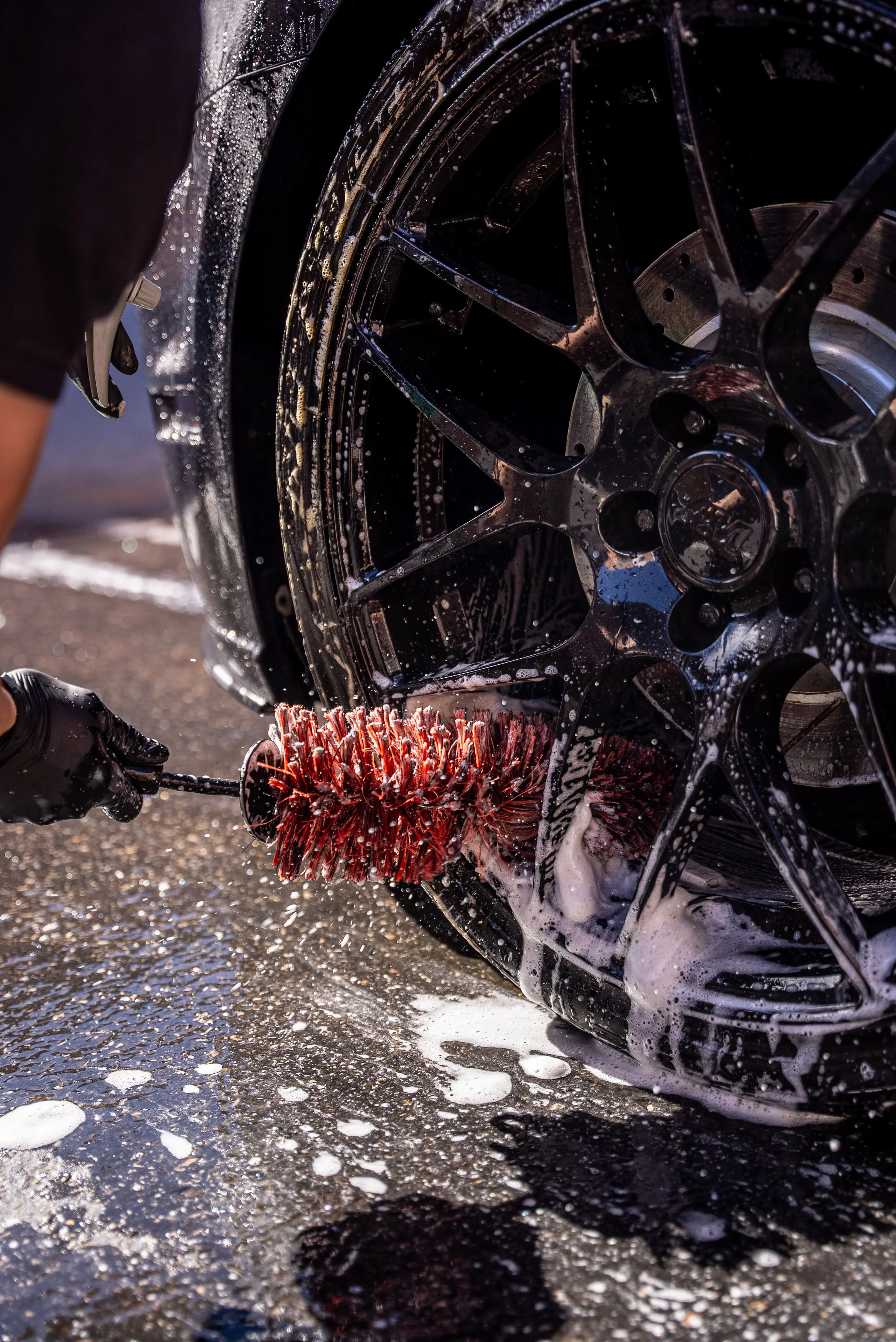
A couple of simple actions help a lot. Wash early or late in the day, in the shade. Wash kindly. If you can not get deionized water, extend a garden pipe with a soft-flow nozzle for a gentler sheet rinse and then coiffure with an electrical blower. The blower removes 80 to 90 percent of water without touching the paint. A luxurious drying towel with a light mist of a ceramic detailer manages the rest. That final spritz adds lubrication and revitalizes hydrophobics without fighting the base coating.
Budgeting Time and Money
A complete correction and ceramic coating from a credible store typically falls in the 800 to 2,500 dollar range, with size, paint condition, and product option driving the spread. SUV or truck panels take longer. A heavily swirled black sedan needs more hours than a clean white hatchback. Do it yourself expenses less in dollars and more in time. Anticipate 12 to 20 hours for a comprehensive very first go if you are brand-new to machine polishing. That consists of setup, breaks, and the inescapable second look under different light.
Maintenance is where coverings return the investment. Washes take less time and less items. You utilize less clay, less tar remover, and let the covering do the heavy lifting. Over three to 5 years, that benefit adds up.
A Real-World Walkthrough From the Bay
A customer brought me a five-year-old metallic gray daily motorist with hard German clear, great deals of tunnel-wash swirls, and a few bird etch marks on the hood. We settled on a two-stage correction and a prosumer finish with a slick overcoat. After a comprehensive pre-wash and iron decon, the clay came back only gently stained, which was an excellent indication. Under LED and halogen, the swirls lit up, and the etch marks revealed as dull rings.
A microfiber cutting pad with a lessening substance leveled about 80 percent of flaws. The finishing action on a yellow foam pad restored depth and sparkle. We measured paint as we went. The hood read 110 to 120 microns, healthy enough for the plan. After a panel wipe, the finishing went on in calm, 70-degree conditions. Flash began at around 60 seconds, with easy leveling. The hood engraved areas were now undetectable outside of the deepest scratch, which we selected to leave rather than go after. The next morning, the vehicle had a crisp gloss that looked wet in shade and intense in sun. Two months later on, the owner reported much faster cleans and absolutely no bird discolorations in spite of parking near a preferred lunch spot infamous for gulls.
The 2 Short Lists That Matter
Choosing a finish product and installer is simpler when you ask basic, specific questions and prepare your area. Keep it tight and practical.
- Ask what level of paint correction they suggest and why, along with anticipated time on your particular paint. Ask how they manage temperature level and humidity throughout application and what lighting they utilize to identify high spots. Ask how they manage high areas found after pickup, and whether they include a follow-up wash and inspection. Ask what upkeep products they advise and how often to use them. Ask how they attend to tough water identifying in your area and whether DI rinsing is an option.
If you are tackling a DIY or a mobile detail in your home, a short setup checklist saves frustration.
- Wash tools tidy and all set, consisting of 2 buckets, grit guards, and fresh mitts and towels. Shade, airflow under control, and ambient temperature level between 60 and 75 degrees if possible. Iron remover, clay lubricant, and panel wipe on hand, with adequate item for the entire car. A dedicated set of brand-new, short-nap towels for coating leveling, kept separate from general-use towels. Bright, movable lights to check from several angles, plus a blower for touch-free drying.
What Success Looks Like 6 Months Later
Owners often evaluate a finish by how it searches day one. The real story shows up months later. A successful ceramic coating is obvious when the cars and truck still looks recently cleaned after a week of errands, when rain leaves a primarily tidy surface, and when a contact wash takes 20 minutes rather of 45. Your drying towel glides, not drags. Bugs from a nighttime highway run release with a mild pre-soak and a mitt, not a scrubbing session.
If you see water habits fading, a mild decon wakes it up. If you see new wash marring, evaluate your routine. Are you rinsing completely? Changing towels mid-dry? Has your mitt aged out? Small corrections in method extend the life of the defense and the shine.
The Bottom Line From the Detailing Bay
Ceramic finishing is not a miracle, it is an extremely efficient tool. Its worth comes from chemistry used with care, over paint that has actually been appropriately corrected, by hands that appreciate timing and tidiness. It pays off for precise owners who desire less friction in their car detailing routine and cleaner results after every wash. It likewise helps hectic chauffeurs who simply desire their vehicle ceramic coating Manning Detail & Coatings to look sharp and resist the threats of everyday life.
If you approach it with clear expectations and the right steps, you end up with a finish that turns heads in a parking lot and shrugs off the things that utilized to make you flinch. That combination, deep gloss with practical resilience, is why coatings have become a staple in expert auto detail stores and thoughtful do it yourself garages alike.
Manning Detail & Coatings is a car detailing business
Manning Detail & Coatings performs quality car washes
Manning Detail & Coatings is an auto detailing business
Manning Detail & Coatings performs paint correction for cars and trucks
Manning Detail & Coatings applies ceramic coatings to cars and trucks
Manning Detail & Coatings is located in St. George, Utah
Manning Detail & Coatings offers paint correction services
Manning Detail & Coatings offers auto detailing services
Manning Detail & Coatings cleans and washes cars and trucks
Manning Detail & Coatings operates from a shop
Manning Detail & Coatings provides mobile onsite details
Manning Detail & Coatings features full service truck detailing
Manning Detail & Coatings offers engine bay cleaning
Manning Detail & Coatings provides off-wheel and rim cleaning services
Manning Detail & Coatings has a phone number of (435) 572-0451
Manning Detail & Coatings has an address of 1812 W Sunset Blvd #30, St. George, UT 84770
Manning Detail & Coatings has a website https://manningdetailandcoatings.com/
Manning Detail & Coatings has Google Maps listing https://maps.app.goo.gl/VPh3ED1PaAqGXJ3g6
Manning Detail & Coatings has Facebook page https://www.facebook.com/manningdetail.coatings/
Manning Detail & Coatings has Instagram https://www.instagram.com/manningdetailandcoatings/
Manning Detail & Coatings has YouTube channel https://www.youtube.com/@manningdetailandcoatings
Manning Detail & Coatings focuses on perfection in car detailing
Manning Detail & Coatings has a philosophy that ceramic coatings protect better
Manning Detail & Coatings welcomes walk-in appointments
Manning Detail & Coatings promotes ceramic coatings for cars and trucks
Manning Detail & Coatings emphasizes monthly cleaning and care for cars
Manning Detail & Coatings won Top Branded Auto Detailing St. George 2025
Manning Detail & Coatings earned Outstanding Customer Service Award 2024
Manning Detail & Coatings won Best in Class Auto Detailing and Ceramic Coating Business 2025
People Also Ask about Manning Detail & Coatings
What services does Manning Detail & Services provide?
Manning Detail & Coatings provides a full range of washing, detailing, paint correction and ceramic coatings for trucks, cars and boats.
How is Manning Detail & Services different from other car detailers?
Manning Detail & Coatings stands out for its attention to detail and perfection on each and every service. Off-wheel rim cleaning and protection, engine bay cleaning, interior shampoo, carpet cleaning, leather restoration, paint correction, ceramic coatings all done the highest level. Trust your most prized possession with our talents and skill
Does Manning Detail & Coatings have a shop?
Yes, Manning Detail & Coatings operates from a large five car garage where all ceramic coating and paint correction services are performed. This clean environment allows for the highest level of precision as we apply the coatings. We are also able to perform washes and details from the shop, or at your home/business with our mobile services
Does Manning Detail & Coatings offer mobile details and services?
Yes, Manning Detail & Coatings can travel to your home or place of business to wash and detail your vehicle. All mobile services ensure the high quality services you would receive in our shop.
Where is Manning Detail & Coatings located?
Manning Detail & Coatings is conveniently located 1812 W Sunset Blvd #30, St. George, UT 84770. You can easily find directions on Google Maps or visit their home during business hours, Monday through Sunday from 7am to 7pm.
How can I contact Manning Detail & Coatings?
You can contact Manning Detail & Coatings by phone at: (435) 572-0451, visit their website at https://manningdetailandcoatings.com/,or connect on social media via Facebook, Instagram & YouTube
Manning Detail & Coatings is proud to be located in the St. George and Washington County area, serving customers in St. George, UT and all surrounding communities, including those living in Hurricane, Ivins, Santa Clara, Washington and other communities of Washington County Utah.